
Why Audi’s New Q7 Launches Diesel-Only in Europe
Audi Reads the Room With a Diesel-First Q7 in Europe
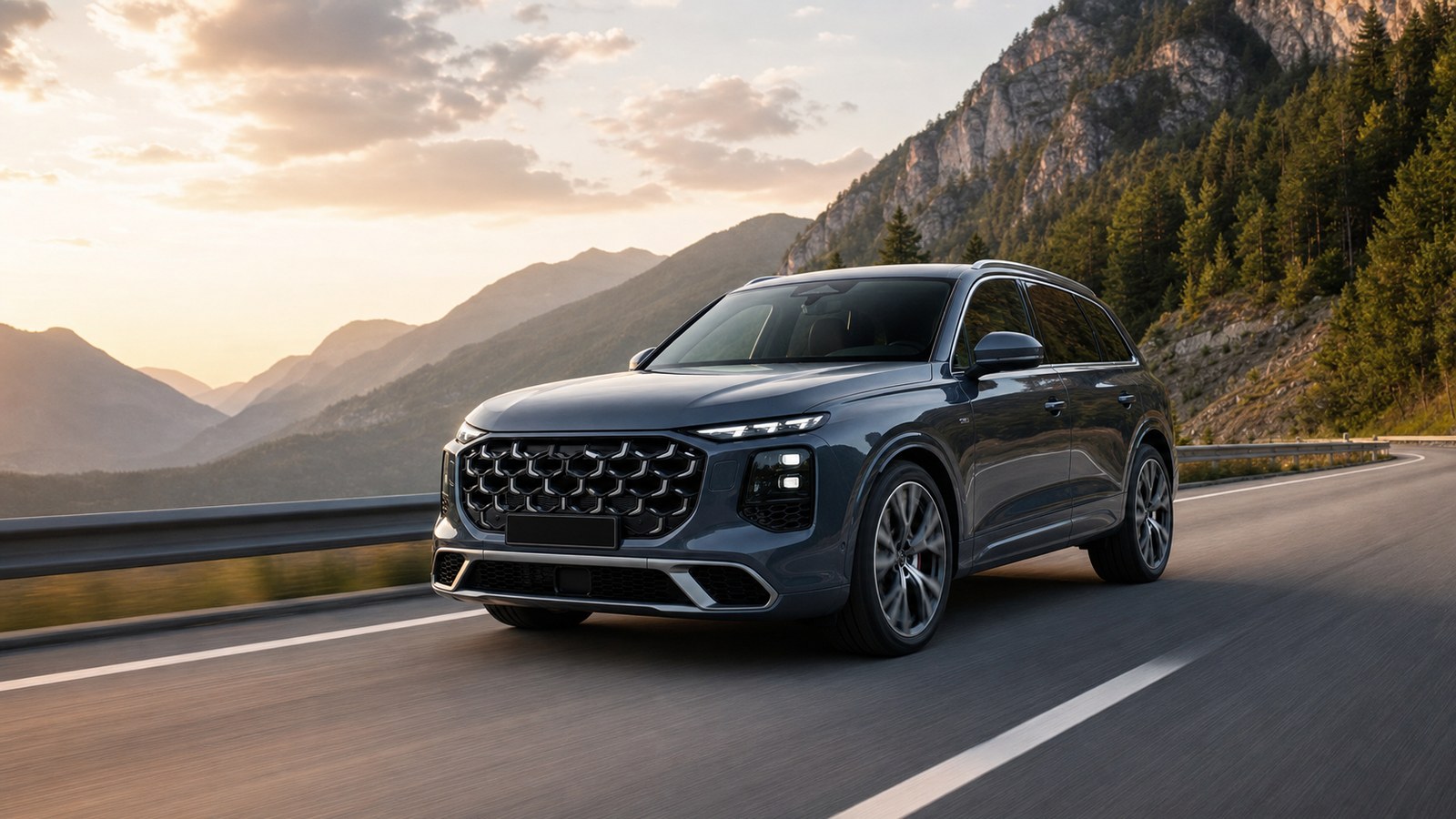
The third-generation Q7 just landed in Europe with one engine on the menu, and it runs on diesel. That single choice tells you plenty about how Audi still matches its biggest SUVs to what local buyers actually want.
- Europe’s new Q7 launches with a 3.0-liter V6 turbodiesel only, in two power levels.
- Gasoline V6 and plug-in hybrid versions arrive between late 2026 and early 2027.
- The United States skips diesel entirely, getting twin-turbo V6 and V8 gasoline power instead.
One Engine, Two Outputs, Plenty of Reasoning
When Audi pulled the wraps off the redesigned Q7, European shoppers found a short spec sheet. The luxury SUV starts life on the continent with a single turbodiesel 3.0-liter V6, offered in 295 hp and 241 hp tunes. Both versions add mild-hybrid tech that contributes an extra 24 hp, helping smooth out stop-start driving and low-speed response.
That felt like a surprise at first glance. Diesel has slid hard from its mid-2010s peak, when it made up more than half of all new car sales across Europe. Through the first four months of this year, diesel accounted for just 6.7 percent of total registrations. So why lead with it?
Audi’s answer is refreshingly simple. The company starts each market with the engines it expects to sell best, and for European Q7 buyers that’s still the V6 TDI. A spokesperson framed it around customer demand, noting that Audi launches with the most important engines per market or region. In the big premium SUV class, plenty of long-distance drivers still love a torquey diesel for towing, road trips, and steady highway cruising.
Gas and Plug-In Power Are Coming
If diesel feels like yesterday’s fuel to you, hang on. Audi plans to broaden the European lineup with a V6 gasoline engine sometime between late 2026 and early 2027. A plug-in hybrid joins the range around the same window, which makes sense given how many six- and eight-cylinder PHEVs the Volkswagen Group already builds.
Pricing offers another clue about how this plays out. The Q7 opens at 87,900 euros in Germany for the lower-powered diesel. There’s a solid chance the gas V6 arriving roughly six months later slides in under that figure, giving buyers who skipped diesel a cheaper way into the new model.
America Goes a Completely Different Direction
Cross the Atlantic and the story flips. In the United States, the Mercedes GLE rival shows up with twin-turbo V6 and V8 gasoline engines, no diesel in sight. The hot SQ7 is part of the American launch too, packing a 4.0-liter V8 that cranks out 591 horsepower.
Whether Europe ever gets that V8 SQ7 is an open question. Longtime fans will recall that Audi once sold the SQ7 with a V8 diesel on the continent before switching to gasoline a few years back. Every version of the new Q7, no matter the market or engine, comes standard with Quattro all-wheel drive.
Diesel’s Quiet Survival at the Top of the Market
Diesel may be fading across Europe overall, but it hangs on at the upper end of the SUV segment. Tougher emissions rules pushed many automakers to drop the fuel from their smaller cars, which dragged down its share faster than buyer preference alone would have. Audi has stayed loyal to TDI power, fitting diesel engines to everything from the compact A3 and Q3 up to this new Q7.
The model itself is in a transitional moment. Since 2005, the Audi Q7 has been the brand’s largest SUV, but the first-ever Q9 debuts later this year and takes that crown. The two share plenty of DNA, with the Q9 adding extra space and a more lavish cabin.
What the Diesel-First Plan Really Signals
Launching a diesel Q7 in 2026 reads as a confidence vote. Audi is betting mild-hybrid diesel can carry the segment through the rest of the decade while gas and plug-in options fill in behind it. For buyers, the takeaway is straightforward. If you want maximum range and easy towing now, the TDI delivers. If you’d rather wait, cheaper gas and electrified versions are only a few months out. Regional taste, not a one-size global rollout, is steering this launch, and that’s a smart way to read a shifting market.