
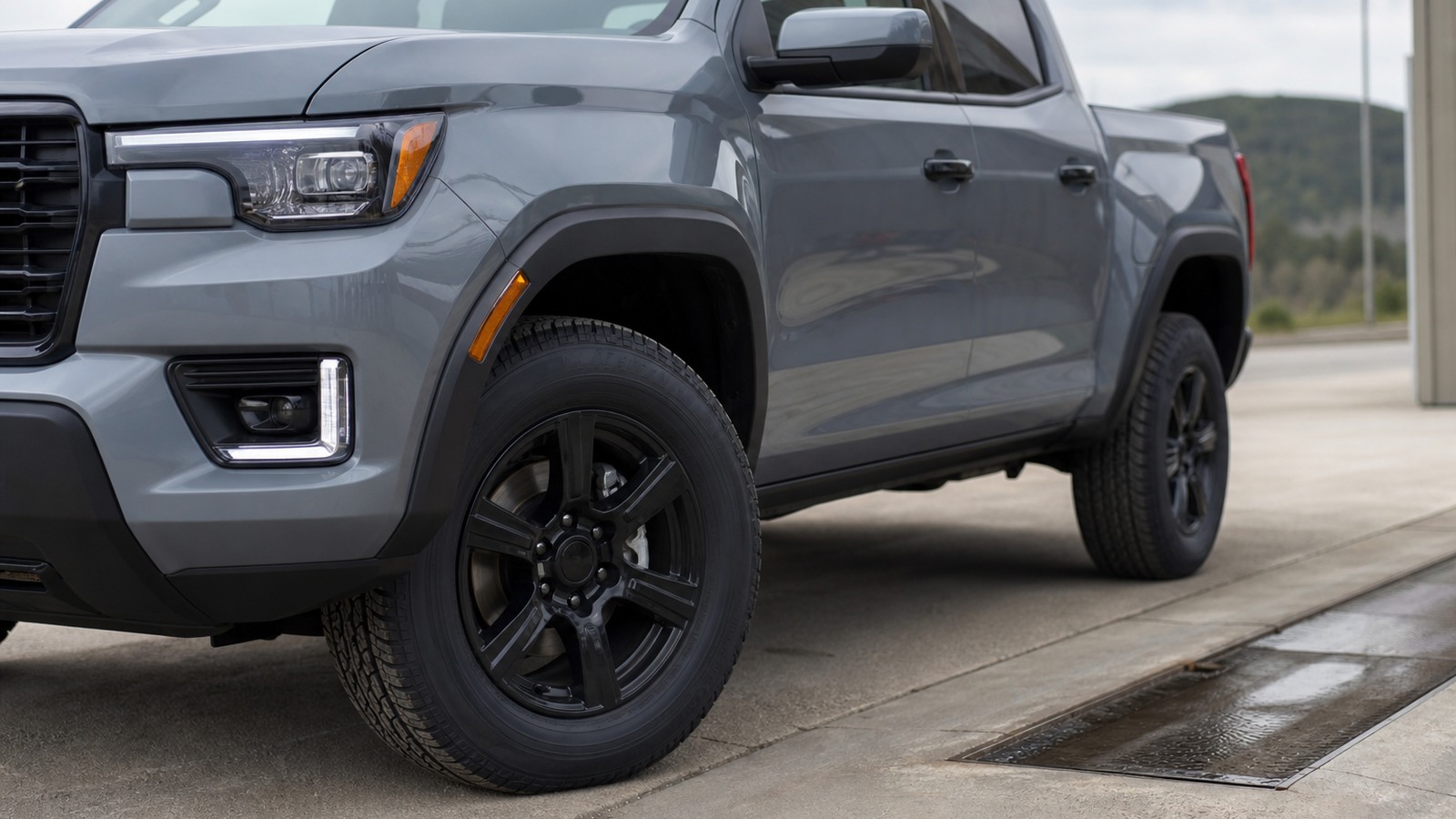
Federal Brake-System Probe Now Reaches the 2023-2026 GMC Canyon
Federal safety regulators have widened their look at a General Motors brake system, and the expanded review now formally reaches the 2023-2026 GMC Canyon along with more than a million other vehicles that carry the same hardware.
- The Office of Defects Investigation raised its inquiry to an Engineering Analysis, EA26006, on August 21, 2026, covering an estimated 1,164,820 vehicles.
- The 2023-2026 GMC Canyon and Chevrolet Colorado are named because both carry the eBoost brake module across those model years.
- An Engineering Analysis is the final investigative stage before regulators can press for a recall.
How the Inquiry Grew
The investigation traces back to complaints involving the 2023 Cadillac Lyriq. ODI began Preliminary Evaluation PE24011 on April 11, 2024, after drivers reported reduced brake assistance. Those complaints described a stiff pedal together with a brake-system warning, occurring either when the vehicle was started or while it was moving.
During the early inquiry, GM supplied material from its own examinations of brake-assist failures. Those company records linked the problem to alleged fractures in a spindle inside the eBoost assembly. Unlike a conventional vacuum booster, this electro-hydraulic unit relies on an electric motor to reduce the effort required at the pedal.
Which Vehicles the Analysis Covers
Regulators list the 2023-2026 GMC Canyon, 2023-2026 Chevrolet Colorado, and 2023-2026 Cadillac Lyriq as equipped with this system. The list also spans the 2024-2026 Chevrolet Blazer EV, Equinox EV, and Traverse, GMC Acadia, Buick Enclave and Envision, and Cruise Origin, plus the 2025-2026 Cadillac Celestiq and Optiq. The analysis also counts the 2024-2026 Honda Prologue and Acura ZDX as peer vehicles because they were built through cooperation between GM and Honda. The Canyon has shared the module with its Colorado twin since the third generation launched for 2023.
For anyone shopping a used GMC Canyon, the model-year range is the first detail to notice. The engineering analysis covers 2023 through 2026 trucks, but only a VIN-specific recall lookup or manufacturer notice can show whether a particular vehicle is included in any action that follows.
What GM Says and Why Regulators Pushed Further
GM’s account says a spindle fracture leaves anti-lock braking, electronic stability, and traction functions active until the vehicle comes to rest. After that stop, those systems and powered brake assistance are no longer available. The Electronic Brake Control Module then stores a diagnostic code, sounds a chime, displays a service brake system message, illuminates warning lamps for braking and traction systems, and limits speed to roughly 43 mph.
The complication is that the Office of Defects Investigation has continued to receive loss-of-brake-assist reports that do not match that description. Some allege an immediate loss of brake assist rather than one that waits until the vehicle has stopped. Reports of assist disappearing while the vehicle is in motion describe a stiffer pedal and longer stopping distance, conditions that could lead to crashes or injuries. The official EA26006 description covers eBoost failures that may affect both braking and steering assistance, putting possible steering consequences inside the review.
The Numbers and What Comes Next
The record so far lists 745 total incident reports, with 227 sent to regulators and 531 to GM after duplicates were removed. It counts 22 crashes or fires, five injury incidents involving six injuries, and no fatalities. This remains an investigation rather than a recall, and no repair campaign has been announced. An Engineering Analysis is the stage where regulators examine failure data, test components, and decide whether to seek a recall. Owners who have experienced a loss of brake assist can file a report at NHTSA.gov, and owner complaints are what moved this inquiry to its current stage.