
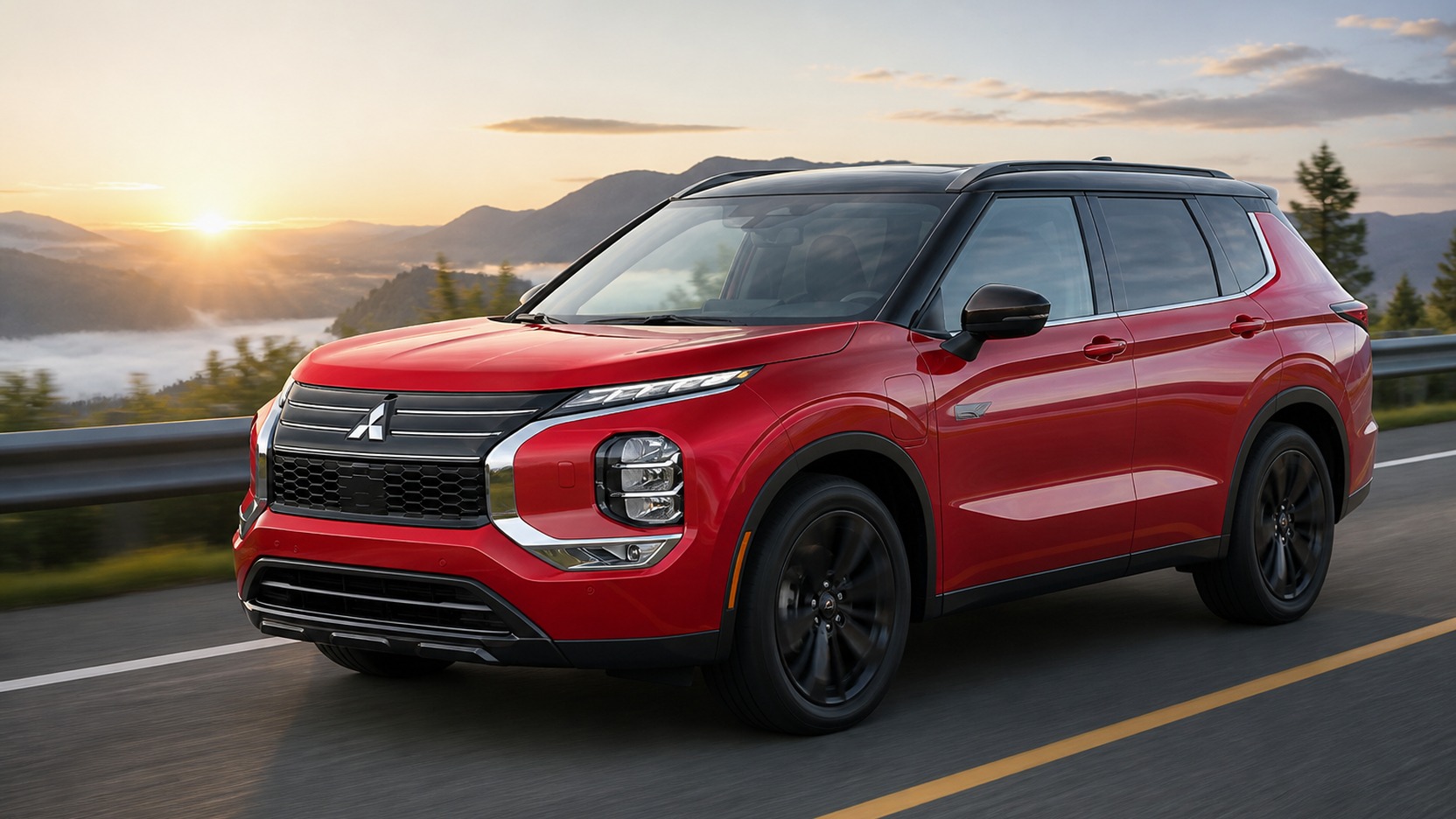
Mitsubishi has spent years quietly building the Outlander plug-in hybrid into one of the more sensible ways to dip a toe into electrified driving, and the latest refresh pushes that idea further by adding real muscle without asking buyers to swallow a big price jump.
- The refreshed Outlander PHEV focuses on stronger performance while holding onto its family-friendly value.
- Its plug-in setup pairs a gas engine with twin electric motors and all-wheel drive.
- Three rows of seating and daily electric-only range keep it practical for real households.
A Familiar Recipe With More Bite
The Outlander PHEV has always leaned on a smart combination of hardware. A 2.4-liter four-cylinder gas engine works alongside a pair of electric motors, one on each axle, which gives the SUV standard all-wheel drive through Mitsubishi’s Super All-Wheel Control system. That layout lets the vehicle drive on electricity alone for shorter trips, then call on the engine when you need more range or more effort.
The refresh sharpens this formula rather than reinventing it. Buyers get a stronger, more responsive driving feel, so passing on the highway and merging into fast traffic feel less strained than before. The payoff shows up in everyday moments, like climbing an on-ramp with the family aboard or hauling a full load of gear without the powertrain feeling stretched thin.
Electric Miles for the Daily Grind
The best part of a good plug-in hybrid is how it fits into normal life. Plenty of Outlander PHEV owners handle the school run, the grocery trip, and the short commute on battery power alone, then plug in at home overnight. That means many days pass without a single stop at the gas station.
The SUV carries a usable battery pack sized for real daily driving, and it supports faster charging when you need to top up away from home. When the electric miles run low, the gas engine steps in so you never have to plan your whole day around a charger. For households that want lower running costs but aren’t ready to go fully electric, that flexibility is the whole point.
Room for the Whole Crew
One thing that still sets the Outlander PHEV apart from many rivals is its seating. It offers three rows, which is rare in this class of plug-in hybrid. The third row is extremely cramped; the review found it was not realistically large enough even for small children. Families should treat it as emergency-only space rather than regular seating.
Fold those rear seats down and you free up a generous cargo hold for road-trip luggage or a big-box run. The cabin design carries over the more grown-up look Mitsubishi introduced with the current generation, with cleaner materials and a layout that feels a step above where the brand sat a few years ago.
Why the Value Angle Matters
Adding power usually means adding cost, so the interesting move here is how modest the price increase stays. Mitsubishi seems to understand that its core buyer shops on value first. People come to the Outlander PHEV because it does a lot for the money, offering all-wheel drive, electric running, and family space in one package that undercuts a lot of the competition.
Keeping the price sensible while boosting performance protects that reputation. It also makes the SUV easier to recommend against pricier plug-in rivals that ask you to pay a premium for similar or fewer features. A longer warranty on the powertrain and battery, a Mitsubishi calling card, only adds to the peace-of-mind pitch.
The refreshed Outlander PHEV reads like a careful update rather than a dramatic overhaul, and that’s a good thing. It takes an SUV that already made sense on paper and gives it a bit more confidence on the road. If you want a three-row hybrid that can run on electricity for your daily drives, tackle bad weather with all-wheel drive, and still stay reasonable on price, this one belongs on your short list. Test the electric range against your own commute, and see how the added muscle feels for yourself.