
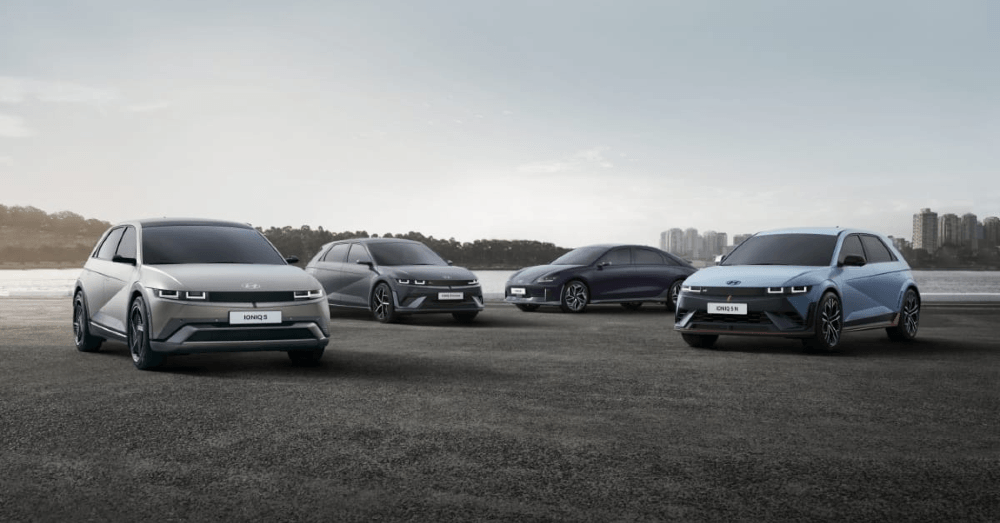
February 2026 turned out to be a record-breaking month for both Hyundai and Kia in the U.S. market. Even with the federal $7,500 EV tax credit gone, the Ioniq 5 electric crossover posted a surprising 33% year-over-year sales increase, proving that buyers are still very much interested in electric cars when the price is right.
- Hyundai sold 65,677 units in February, a 6% year-over-year increase and a new monthly record for the brand.
- Kia also set a February U.S. sales record, with 66,005 units sold, a 4% year-over-year gain.
- The Ioniq 5 electric crossover moved 3,239 units last month, marking a 33% year-over-year increase.
Hyundai’s February Numbers Tell a Big Story
With 65,677 vehicles sold in the U.S. last month, up 6% from February 2025, Hyundai posted its third consecutive month of record sales. About 22,357 of those units were electrified models, including hybrids, plug-in hybrids, and fully electric vehicles. That’s a 56% jump in electrified sales, fueled primarily by hybrid trims of the Sonata, Santa Fe, Tucson, and Elantra.
Hybrids have been running hot for Hyundai over the past several months, and February continued that trend. Buyers who aren’t quite ready to go fully electric are scooping up hybrid versions of popular models, and the numbers reflect that shift in a big way.
But the standout performer? The Ioniq 5. Hyundai moved 3,239 units of the electric crossover in February alone, good for a 33% bump over the same month last year. Through the first two months of 2026, Ioniq 5 sales sit at 5,365 units, up 14% year to date. That’s a pretty impressive rebound, especially considering the removal of the federal EV tax credit at the end of September 2025.
So what’s behind the comeback? A lot of it comes down to pricing. The record-setting Ioniq 5 sales came after Hyundai launched aggressive discounts on 2026 models in early February, offering a $10,000 discount on the 2026 Ioniq 5, or 0% APR financing for 72 months, plus an additional $5,000 off. After cutting prices on the 2026 model year, the Hyundai Ioniq 5 remains one of the most affordable EVs in the U.S., starting at just $35,000.
The Rest of the EV Lineup Tells a Different Story
While the Ioniq 5 had a great month, the rest of Hyundai’s electric roster didn’t share the same fortune. The Ioniq 6 sedan managed only 229 units in February, a 77% slide from a year ago. That sedan has struggled as American buyers continue to favor SUVs and crossovers over four-door cars.
The Ioniq 9, Hyundai’s three-row electric SUV, is still fairly new and building awareness. Hyundai sold another 505 Ioniq 9s last month, bringing its total to 1,085 through the first two months of 2026. Those numbers should grow as more buyers discover it, but for now, the Ioniq 5 remains the clear volume leader on the electric side.
If you’re thinking about going electric on a budget, you might also find a used Hyundai EV worth looking into, since higher new-car incentives often create opportunities in the pre-owned market too.
Kia Hits Records Too, but EV Sales Lag Behind
Kia also set a February U.S. sales record, with 66,005 units sold, a 4% year-over-year gain, and hybrid sales surged 53%. That hybrid momentum mirrors what Hyundai is seeing across its own lineup.
Kia’s EV sales continued to suffer, with only 600 units of the EV6 and 819 units of the EV9 sold last month. Those are pretty thin numbers for two well-reviewed electric vehicles. The Kia EV6, despite being a close relative to the Ioniq 5, sold just 12,933 examples in all of 2025, a 40% drop from 2024.
Taken together, the two brands are starting to look a lot like Toyota in their sales composition, with hybrids carrying an ever-larger share of the pie while EVs remain a work in progress. That’s not necessarily a bad position. Both brands have broad hybrid availability across their lineups, and they still offer some of the best EV options on the market for buyers ready to make the switch.
Can the Ioniq 5 Keep This Momentum Going?
The question now is whether the Ioniq 5’s February sales rebound signals that organic EV demand is bouncing back in a post-tax-credit world, or if it was simply a one-month anomaly. The aggressive pricing certainly played a role. Hyundai is doing what it takes to keep shoppers interested, and $10,000 off an already competitive EV is hard to ignore.
Hyundai currently builds all-electric vehicles, including the Ioniq 5 and Ioniq 9, at the Hyundai Motor Group Metaplant America in Georgia. Building EVs domestically gives Hyundai a pricing advantage and helps protect against tariff headwinds that have hurt other automakers. By 2028, the facility is expected to reach a total production capacity of 500,000 EV and hybrid vehicles.
For now, the takeaway is pretty clear. Hyundai and Kia are firing on all cylinders, with hybrids doing the heavy lifting and the Ioniq 5 proving that a well-priced, well-built electric crossover can still find plenty of buyers. Whether the rest of their EV lineups can catch up remains the bigger question heading into spring.